
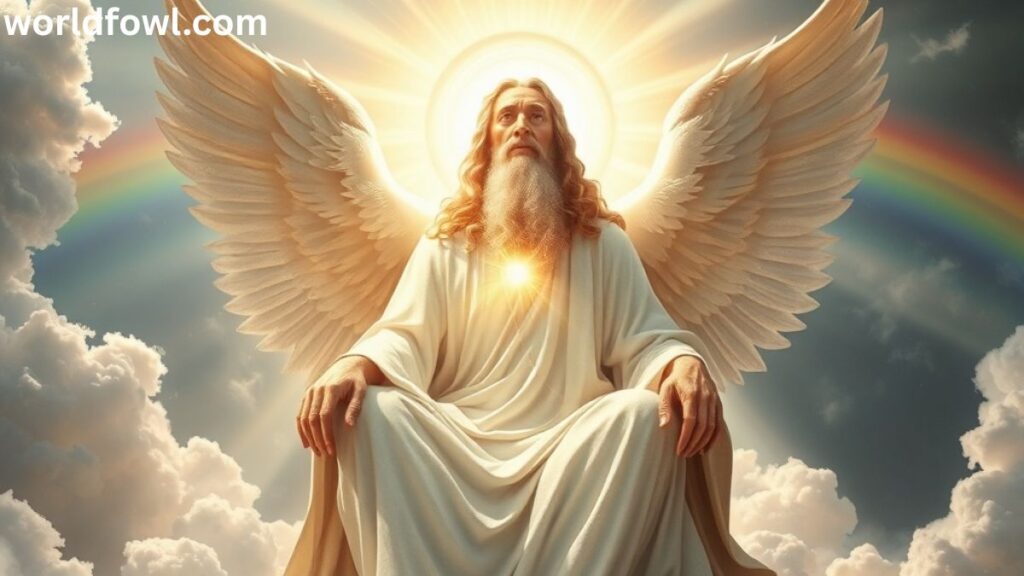
What Does a Biblically Accurate God Look Like? A biblically accurate God refers to the understanding of God based entirely on how He is revealed in Scripture—His character, His attributes, His nature, and His actions as described throughout the Old and New Testaments. Rather than relying on cultural images or artistic portrayals, this view seeks to recognize God as holy, just, loving, powerful, eternal, all-knowing, unchanging, and merciful, exactly as the Bible presents Him.
There is something captivating about discovering who God truly is beyond the simplified ideas people often imagine. When we explore the richness of His nature, we encounter a God who inspires awe, challenges our assumptions, and reveals a depth far greater than any earthly depiction. This creates a sense of wonder that draws readers deeper into understanding the One who shapes all of creation.
Learning what a biblically accurate God looks like opens the door to a transformative view of faith. It reveals a God who is both majestic and near, whose power commands reverence and whose love invites relationship. By exploring His true nature, readers gain a clearer, more meaningful understanding of the God they worship, trust, and seek to follow.
God Is Holy
Holiness stands as the cornerstone of God’s nature. When the prophet Isaiah encountered the presence of God, he heard seraphim crying out, “Holy, holy, holy is the LORD of hosts” (Isaiah 6:3). This threefold repetition in Hebrew expresses the ultimate superlative—God is maximally, completely, and perfectly holy.
But what does holy actually mean? At its core, holiness refers to being utterly separate from sin and morally pure beyond human comprehension. God’s holiness represents divine perfection in every aspect. He contains no darkness, no moral compromise, no shadow of impurity.
God Is Holy
This moral purity creates a stark contrast with humanity. When Isaiah saw God’s glory revealed, his immediate response was terror: “Woe is me! For I am lost; for I am a man of unclean lips” (Isaiah 6:5). The holy nature of God exposes our fallen condition.
Scripture consistently emphasizes this aspect:
- “Your eyes are too pure to look on evil; you cannot tolerate wrongdoing” (Habakkuk 1:13)
- “God is light; in him there is no darkness at all” (1 John 1:5)
- “Be holy, because I am holy” (1 Peter 1:16)
The holiness of God theology has practical implications. It explains why sin separates us from God—not because He’s distant or uncaring, but because His divine perfection cannot coexist with moral rebellion. This understanding drives us toward repentance and creates appropriate fear of the Lord, which Scripture describes as the beginning of wisdom.
Living according to divine standards requires recognizing this gap. We can’t simply “be better people” and meet God’s standard. His holiness demands perfection we cannot achieve, which is precisely why redemption through Christ becomes necessary.
The awe and reverence this produces isn’t servile fear—it’s the appropriate response when finite beings encounter infinite moral purity. Ancient Israel understood this. When God descended on Mount Sinai, the people trembled. They asked Moses to speak to them instead of God directly because they feared His consuming holiness.
God Is Just
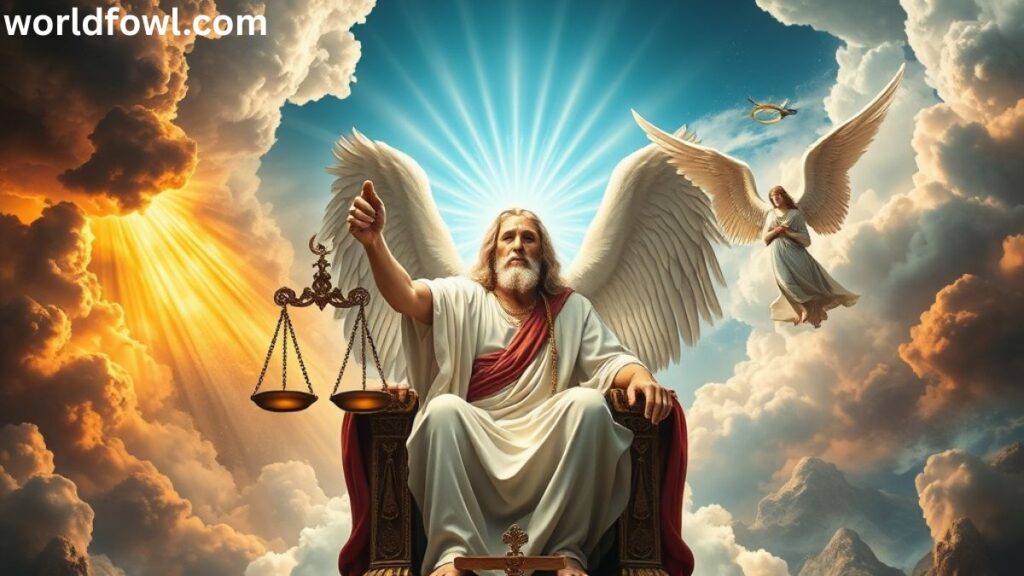
Divine justice flows directly from God’s holiness. A holy God cannot simply overlook sin or pretend evil doesn’t matter. Righteousness and justice form the foundation of His throne (Psalm 89:14).
God’s justice means He judges correctly—always. He operates without bias, corruption, or error. When Scripture declares God as just, it affirms His commitment to good vs. evil distinctions and His perfect administration of moral responsibility.
Consider how the Bible describes divine justice:
Old Testament Examples:
- Sodom and Gomorrah faced judgment for extreme wickedness
- The flood addressed pervasive violence and corruption
- Egyptian plagues responded to oppression and slavery
New Testament Teachings:
- “He will judge the world in righteousness” (Acts 17:31)
- “God is not mocked; a man reaps what he sows” (Galatians 6:7)
- Final judgment separates those who trust Christ from those who reject Him
The nature of divine justice doesn’t contradict mercy—we’ll explore that tension shortly. But Scripture is clear: God takes sin seriously. He doesn’t grade on a curve or ignore rebellion.
This righteous judgment also ensures that victims of injustice will see vindication. When evil prospers temporarily, God’s justice provides hope. The wicked won’t ultimately triumph. Oppressors will face consequences. This biblical worldview sustained believers through persecution across centuries.
God Is Just
What Does a Biblically Accurate God Look Like? Biblical justice theology also emphasizes restoration, not merely punishment. God’s justice aims to make things right—to restore what was broken and heal what was damaged. The Hebrew concept of mishpat (justice) and tzedakah (righteousness) intertwine, suggesting that true justice includes setting things right through active intervention.
God’s justice operates at multiple levels:
| Aspect | How It Works | Biblical Support |
|---|---|---|
| Retributive | Punishes wrongdoing | Romans 12:19 |
| Restorative | Heals and rebuilds | Joel 2:25 |
| Distributive | Ensures fairness | Proverbs 21:3 |
| Procedural | Judges without partiality | Deuteronomy 10:17 |
This divine authority to judge comes from His role as Creator. He established moral law because He designed reality itself. Sin isn’t merely breaking arbitrary rules—it’s violating the structure of how things should function.
God Is Loving
Here’s where many people get confused. How can a holy and just God also be loving? Doesn’t judgment contradict love?
Biblical love differs radically from sentimental affection. When Scripture declares “God is love” (1 John 4:8), it reveals something fundamental about divine nature—not that God sometimes feels affectionate, but that love forms His essential character.
Divine love expresses itself in Scripture through several concepts:
Agape – Sacrificial Love This unconditional love gives without expecting return. “God so loved the world that he gave his one and only Son” (John 3:16). This sacrificial love reaches beyond what we deserve.
Hesed – Steadfast Love This Hebrew term combines love, loyalty, and faithfulness. God’s hesed means He keeps covenant promises regardless of human failure. “His steadfast love endures forever” appears as a refrain throughout Psalms.
Racham – Compassionate Love This describes tender compassion, like a parent toward a child. “As a father has compassion on his children, so the LORD has compassion on those who fear him” (Psalm 103:13).
The nature of divine love appears most clearly in Christ’s incarnation and crucifixion. God didn’t remain distant from human suffering—He entered it. He experienced betrayal, torture, and death. This demonstrates love that goes beyond emotion into sacrificial action.
God Is Loving
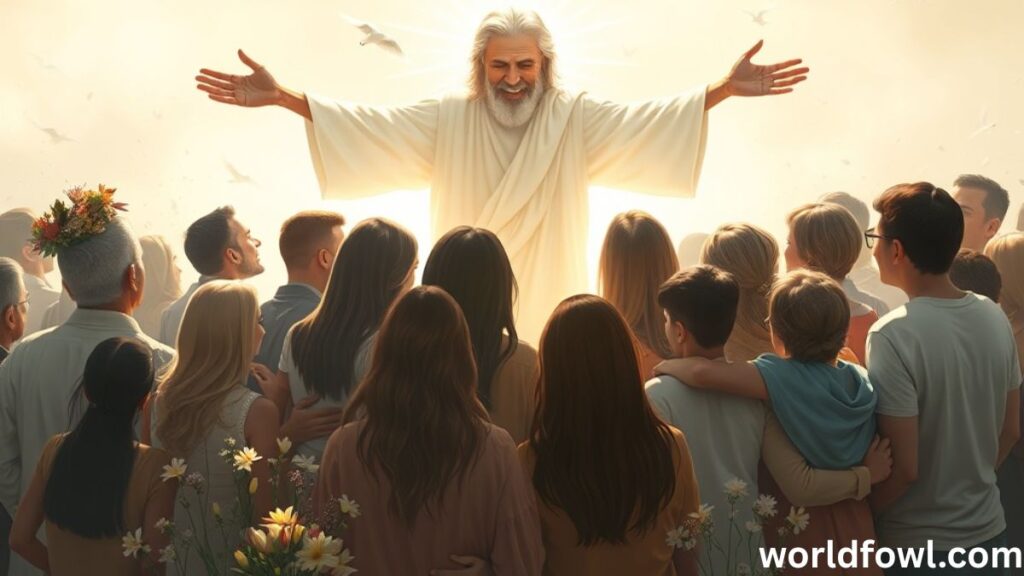
God’s love also enables redemption. His justice demanded payment for sin, but His love provided it through Christ. This satisfies both attributes of God simultaneously—justice receives what it requires while mercy triumphs.
What Does a Biblically Accurate God Look Like? Consider these expressions of divine love:
- God pursues wandering humanity (parable of the lost sheep)
- He disciplines those He loves (Hebrews 12:6)
- He forgives repeatedly (seventy times seven)
- He adopts believers as children (Galatians 4:5)
- He prepares eternal heaven for His people (John 14:2)
This love isn’t soft or weak. It’s fierce, protective, and transformative. Spiritual transformation happens because God’s love refuses to leave us unchanged. He loves us too much to accept our brokenness as final.
Understanding God’s essence requires grasping this: His love and justice aren’t competing attributes. They work together. Love without justice becomes sentimentality that tolerates abuse. Justice without love becomes cruel legalism.
God Is Powerful
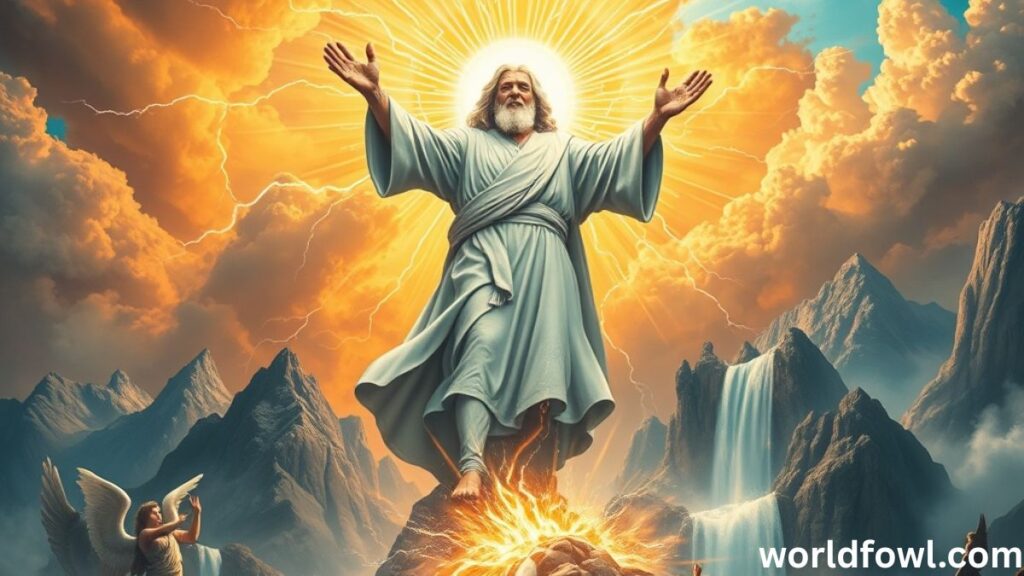
When we discuss God’s power, we’re not just saying He’s strong. Scripture reveals omnipotence—unlimited, absolute power over all creation. The Almighty designation appears throughout the Bible, emphasizing this divine omnipotence.
God’s power manifests in multiple ways:
Creative Power He spoke the universe into existence. “By the word of the LORD the heavens were made” (Psalm 33:6). This wasn’t magical—it demonstrated supreme creator authority over matter, energy, space, and time.
Sustaining Power God doesn’t just create and abandon. “He upholds the universe by the word of his power” (Hebrews 1:3). Atoms hold together because He maintains them. Gravity functions because He sustains physical laws.
Redemptive Power Salvation demonstrates power over sin, death, and spiritual darkness. Christ’s resurrection proved God’s power conquers humanity’s greatest enemies.
Sovereign Power The sovereignty of God means He rules over all things.
God Is Powerful
What Does a Biblically Accurate God Look Like? he Bible records stunning displays of divine power:
- Splitting the Red Sea (Exodus 14)
- Stopping the sun (Joshua 10:13)
- Raising the dead (multiple accounts)
- Feeding thousands from minimal resources
- Calming storms instantly
- Defeating armies without weapons
Yet God’s power operates with restraint. He doesn’t bully or coerce. He could force everyone to worship Him, but instead He invites spiritual relationship based on free choice.
Omnipotence of God also means nothing is impossible for Him. When angels announced impossible pregnancies, they reminded hearers that “nothing is impossible with God” (Luke 1:37). This provides hope when circumstances seem insurmountable.
God’s power also guarantees trustworthy promises. When He commits to something, nothing can prevent its fulfillment. His unfailing promises rest on His infinite ability to accomplish what He declares.
Consider what divine authority means practically:
- Your struggles don’t exceed His power to help
- Evil won’t ultimately triumph over good
- Death doesn’t have final authority
- No problem is too complex for His wisdom
- No person is beyond His reach
The biblical description of God emphasizes power combined with wisdom. He doesn’t exercise power carelessly. Every demonstration serves purpose—revealing His character, accomplishing redemption, or judging evil.
God Is Eternal
Eternal doesn’t just mean God lives a really long time. The Bible describes Him as existing outside time itself—What Does a Biblically Accurate God Look Like? He has no beginning and no ending. “Before the mountains were brought forth, or ever you had formed the earth and the world, from everlasting to everlasting you are God” (Psalm 90:2).
God identifies Himself as the Alpha and Omega, the beginning and the end (Revelation 22:13). This title emphasizes His eternal existence beyond temporal limitations.
Eternal nature doctrine carries profound implications:
God Created Time Time is part of creation, not part of God’s essence. He experiences reality differently than we do. All moments exist present to Him—past, present, and future distinctions apply to us, not Him.
God Transcends Generations While empires rise and fall, technologies advance and become obsolete, and human fashions change constantly, God remains. He related to Abraham the same way He relates to believers today.
God’s Plans Span Eternity Scripture speaks of plans made “before the foundation of the world” (Ephesians 1:4). Redemption wasn’t a backup plan—it was eternally purposed.
Moses encountered this when God revealed His name: “I AM WHO I AM” (Exodus 3:14). Not “I was” or “I will be”—always present tense. Eternal existence in constant now.
This eternal nature of God theology provides stability. Everything changes around us—relationships, health, circumstances, economies. But God’s unchanging character remains constant. “Jesus Christ is the same yesterday and today and forever” (Hebrews 13:8).
Eternity also means God’s love has no expiration date. His mercy doesn’t run out. His patience isn’t exhausted by repeated human failure. The infinite being possesses infinite capacity for relationship.
For believers, God’s eternal nature promises eternal life. Heaven isn’t just lengthy existence—it’s participation in God’s eternal existence. Death marks a transition, not termination.
God Is All-Knowing
Omniscience means God knows everything—past, present, future. Nothing surprises Him. No hidden thought escapes His awareness. Scripture declares this repeatedly:
“Nothing in all creationWhat Does a Biblically Accurate God Look Like? is hidden from God’s sight” (Hebrews 4:13). His all-knowing nature extends to:
- Every thought and intention (1 Chronicles 28:9)
- Every word before it’s spoken (Psalm 139:4)
- Every action in darkness (Ecclesiastes 12:14)
- The number of hairs on your head (Matthew 10:30)
- Every tear you’ve cried (Psalm 56:8)
Divine omnipotence of knowledge differs from human knowledge in crucial ways:
| Human Knowledge | Divine Knowledge |
|---|---|
| Acquired through learning | Inherent and complete |
| Limited by perspective | Unlimited viewpoint |
| Can be wrong | Always accurate |
| Grows over time | Never changes |
| Forgets | Perfect memory |
The omniscience in Christianity creates both comfort and accountability. Comfort because God understands our circumstances completely. He knows what we need before we ask. Accountability because nothing remains hidden—no secret sin escapes His awareness.
Some wrestle with how God’s foreknowledge relates to human free will. Systematic theology: doctrine of God explores this tension. The biblical position maintains both—God knows all choices we’ll make, yet we genuinely make them freely.
God Is All-Knowing
God’s all-knowing nature also means His guidance is trustworthy. When Scripture provides direction, it comes from One who sees the complete picture. He knows consequences we can’t foresee and dangers we don’t detect.
This attribute distinguishes God from other proposed deities. Many ancient religions imagined gods with limited knowledge, requiring rituals to inform them. The biblical God needs no information updates.
Prayer takes on new meaning when we realize God already knows our requests. We don’t pray to inform Him but to align ourselves with His will and receive what He’s ready to give.
Omniscience in Christianity also underlies judgment. God judges perfectly because He knows all circumstances, motives, and influences. No relevant factor escapes His consideration. His righteous judgment accounts for everything.
God Is Unchanging
Immutability means God doesn’t change in character, promises, or purposes. “I the LORD do not change” (Malachi 3:6). This unchanging nature provides a foundation for trust.
The immutability of God doesn’t mean God never acts or never responds. He clearly interacts with creation dynamically. But His essential nature remains constant. He doesn’t learn, grow, evolve, or adapt His character.
Consider why God’s unchanging character matters:
Reliable Promises When God makes covenant commitments, we trust them absolutely. He won’t change His mind or abandon His word. His faithfulness rests on His unchanging nature.
Consistent Standards Moral responsibility doesn’t shift with cultural trends. What God called holy remains holy. What He identified as sin remains sin. This provides moral stability.
What Does a Biblically Accurate God Look Like? Predictable Responses God’s reactions to sin, repentance, faith, and obedience follow patterns Scripture reveals. We can know how He’ll respond based on His unchanging character.
Stable Relationship Unlike human relationships that evolve and sometimes dissolve, relationship with God provides permanence. His commitment never wavers.
God Is Unchanging
Some Scripture passages seem to show God changing His mind—like when He “relented” about destroying Nineveh after their repentance (Jonah 3:10). Christian doctrine of God explains these as changes in actions, not character. God always responds to repentance with mercy—that’s consistent. What changed was Nineveh’s condition, prompting a predictable response from God’s unchanging nature.
God in the Old Testament and God in the New Testament remain the same Being. Progressive revelation means we learn more about Him over time, but He doesn’t evolve. The God who walked with Adam is the God who returns for His church.
Hebrew and Greek views of God both emphasized permanence. The Hebrew term for truth (emet) relates to firmness and stability—God’s truth stands because He’s unchanging. Greek philosophers valued unchangeableness in the divine, though the biblical version surpasses their understanding.
This stability becomes crucial during life’s chaos. Jobs vanish. Health fails. Relationships fracture. But God’s unchanging character provides an anchor when everything else shifts.
God Is Merciful
Mercy means God doesn’t give us what we deserve. Justice would condemn us; mercy offers redemption instead. “The LORD is compassionate and merciful” (Psalm 103:8).
Divine mercy and grace work together but differ slightly. Grace gives what we don’t deserve (favor, blessings). Mercy withholds what we do deserve (punishment, consequences).
God’s mercy appears throughout Scripture:
- He delayed judgment on Israel repeatedly despite idolatry
- He forgave David after adultery and murder
- He welcomed the prodigal son home
- He saved the thief on the cross at the last moment
- He called Paul despite his persecution of Christians
Divine compassion flows from God’s heart. He takes no pleasure in judgment. “I take no pleasure in the death of the wicked, but rather that they turn from their ways and live” (Ezekiel 33:11).
Biblical anthropology (human response to God) requires understanding this mercy. We can’t earn salvation—we receive it through mercy. Spiritual confidence rests not on our performance but on God’s merciful character.
What Does a Biblically Accurate God Look Like? The balance of God’s judgment and mercy demonstrates divine wisdom. Mercy doesn’t erase justice—it fulfills it differently. Christ absorbed the judgment we deserved, allowing mercy to be extended without compromising righteousness.
God’s reliability includes His mercy. He’s not capricious, extending mercy randomly. He delights in showing compassion to those who turn to Him. His merciful nature is trustworthy.
Believers should reflect this mercy in how they treat others. Jesus taught, “Blessed are the merciful, for they will be shown mercy” (Matthew 5:7). Receiving divine mercy should transform how we extend mercy.
Repentance activates mercy. God doesn’t force mercy on those who reject Him, but He eagerly extends it to those who acknowledge their need. The tax collector who prayed, “God, have mercy on me, a sinner” went home justified (Luke 18:13).
God’s Nature at a Glance
Attributes of God summarized create a coherent picture when viewed together. No single attribute exists in isolation—they all interact in perfect harmony within the divine nature.
Here’s a comprehensive overview of biblical attributes of God:
| Attribute | Meaning | Key Verse | Practical Impact |
|---|---|---|---|
| Holy | Morally perfect, separate from sin | Isaiah 6:3 | Creates standard for righteousness |
| Just | Judges correctly, maintains moral responsibility | Psalm 89:14 | Ensures accountability, vindicates victims |
| Loving | Sacrificially cares, extends grace | 1 John 4:8 | Motivates redemption, invites relationship |
| Powerful | Unlimited ability, sovereign over all | Jeremiah 32:17 | Accomplishes purposes, provides hope |
| Eternal | Exists beyond time, no beginning or end | Psalm 90:2 | Offers permanence, transcends generations |
| All-knowing | Complete knowledge, perfect awareness | Hebrews 4:13 | Provides wise guidance, ensures fair judgment |
| Unchanging | Consistent character, reliable promises | Malachi 3:6 | Creates stability, builds trust |
| Merciful | Withholds deserved punishment, extends compassion | Psalm 103:8 | Makes salvation possible, inspires hope |
Understanding God’s essence requires holding these attributes together.
The theology of God’s attributes reveals internal consistency. God doesn’t contradict Himself. He doesn’t exercise one attribute at the expense of another. They all express His unified character perfectly.
Christian spiritual life develops as we learn to trust these attributes.
The character of Yahweh stands unique among religious concepts. Other religions present deities with limited attributes or conflicting ones. The biblical God alone embodies this perfect integration of seemingly paradoxical qualities.
Relationship with God deepens as we grasp His nature. We don’t relate to an abstract concept but to a Person whose character is revealed, knowable, and consistent. The presence of God becomes tangible when we understand who He actually is.
Living according to divine standards flows from appreciating God’s nature.
God’s Nature at a Glance
The biblical worldview rests entirely on this foundation. How we understand God determines everything else—our view of humanity, moral responsibility, sin, redemption, and ultimate purpose.
Worship becomes the natural response to God’s revealed nature. When we truly see His glory, His perfect character, His magnificent attributes—we can’t help but respond with awe and reverence. Fear of the Lord isn’t terror but appropriate recognition of His worthiness.
Prayer changes when we understand who we’re addressing.
What Does a Biblically Accurate God Look Like? This comprehensive view of what God looks like biblically challenges simplistic characterizations.
The Christian doctrine of God culminates in Christ, where these attributes became flesh. Jesus demonstrated perfect holiness while eating with sinners.
Understanding God’s essence transforms our spiritual relationship with Him.
God’s nature also provides hope in suffering.
The biblically accurate God isn’t tame, predictable, or manageable. He’s magnificently holy, fiercely just, infinitely loving, overwhelmingly powerful, endlessly eternal, completely all-knowing, utterly unchanging, and lavishly merciful.
This God calls us to worship, obedience, trust, and transformation. He doesn’t merely want religious observance—He invites spiritual transformation through relationship with Him. Salvation means entering into connection with this God, experiencing His nature personally, and being changed by His character.
When Scripture commands us to “be holy, because I am holy,” it’s not demanding we achieve divine perfection independently. It’s calling us into spiritual transformation where His attributes gradually imprint on our lives through His presence.
How the Bible describes God ultimately points us to Christ. “Anyone who has seen me has seen the Father,” Jesus declared (John 14:9). The incarnation made God’s attributes visible, tangible, and relatable without diminishing their magnificence.
This complete picture of God’s nature according to Scripture should inspire confidence, not confusion. We serve a God who is both transcendent and immanent—utterly beyond us yet intimately with us. His attributes guarantee He’s worthy of complete trust.
Conclusion
What does a biblically accurate God look like ultimately reveals a Being far more magnificent than human imagination could create. Scripture paints a portrait of divine perfection—perfectly holy yet overflowing with mercy, absolutely just yet radically loving, infinitely powerful yet intimately present. These attributes of God don’t contradict; they harmonize beautifully. What Does a Biblically Accurate God Look Like? God’s nature challenges our comfortable assumptions while offering genuine hope and redemption to broken humanity.
What does a biblically accurate God look like in practical terms means encountering the God who transforms lives through spiritual relationship. He’s not distant or detached. He’s the eternal Creator who pursues worship and connection with His creation. Understanding God’s essence changes how we pray, trust, and navigate moral responsibility. What Does a Biblically Accurate God Look Like? The biblically accurate God isn’t safe or tame—He’s magnificently holy, fiercely just, infinitely loving, and completely trustworthy. That’s the God Scripture reveals, and that’s the God worth knowing.
FAQs
What does it mean when we say God is biblically accurate?
A biblically accurate God refers to God’s nature and attributes as directly revealed in Scripture—emphasizing His holiness, justice, love, power, eternal existence, omniscience, unchanging character, and mercy rather than cultural or artistic interpretations.
Does the Bible describe God’s physical appearance?
The Bible rarely describes God’s physical form because He is spirit (John 4:24). Theophanies—temporary visible manifestations like the burning bush or Christ’s incarnation—reveal God in ways humans can perceive, but His essence transcends physical description.
How can God be both just and merciful at the same time?
God’s justice and mercy work together through redemption—Christ satisfied justice by bearing the judgment for sin, allowing God to extend mercy without compromising righteousness. Both attributes of God operate in perfect harmony, not opposition.
Why does understanding God’s attributes matter for Christians today?
Understanding God’s essence transforms prayer, builds spiritual confidence, guides moral responsibility, and deepens relationship with God. Knowing His unchanging character provides stability during life’s chaos and motivates worship and obedience.
What’s the difference between God’s holiness and His righteousness?
Holiness describes God’s complete moral purity and separation from sin—His essential nature. Righteousness refers to His perfect adherence to moral standards and just actions. Holiness is who He is; righteousness is how He acts consistently with that nature.