
You’ve typed it a hundred times. Then suddenly you stop. Wait is it piece or peice? Your fingers freeze over the keyboard. You second-guess yourself. You might even open a new tab just to confirm.
Sound familiar? You’re in good company. This is one of the most Googled spelling confusion questions in the entire English language searched thousands of times every single day by native speakers, students, writers, and professionals alike. And honestly? The fact that you’re asking shows you care about accurate spelling. That instinct will always serve you well.
Let’s settle this permanently.
The Correct Spelling Full Stop
Piece is always the correct spelling. No exceptions. No debate.
Peice does not exist in any form of standard English. It’s not a historical variant. It is not a British alternative. It’s not an accepted informal form. It’s a spellcheck error plain and simple and every major dictionary in the world flags it immediately.
Here’s the word, broken down letter by letter:
P – I – E – C – E
That’s your anchor. Burn it into your memory. Everything else in this article supports that one simple fact.
Quick confirmation table for those who need a fast answer:
| Spelling | Correct? | In Dictionaries? | Spellcheck Response |
| piece | ✅ Yes | All major dictionaries | Accepted |
| peice | ❌ No | None whatsoever | Flagged immediately |
The “I Before E” Rule And Why It Works Here
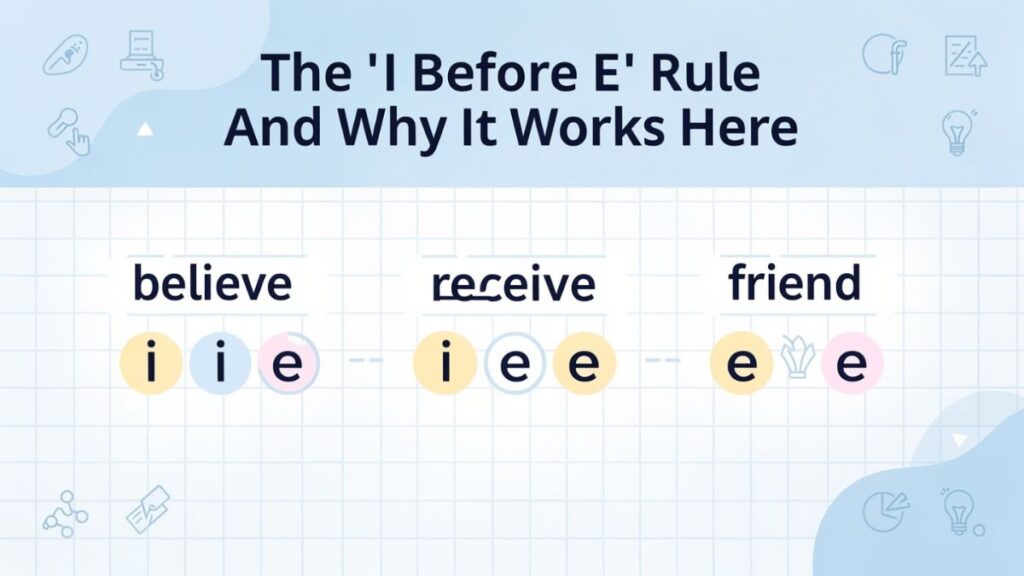
You probably learned this rhyme in elementary school: i before e, except after c. It’s one of the oldest spelling rules in English education taught in classrooms from Karachi to Kansas City.
For the word piece, the rule works perfectly. Look at it: p-ie-ce. The i comes before the e. Clean, simple, consistent. This is the right spelling, and the rule backs it up completely.
Other common words that follow the exact same grammar patterns:
- believe — b-ie-ve
- field — f-ie-ld
- shield — sh-ie-ld
- grief — gr-ie-f
- yield — y-ie-ld
- achieve — ach-ie-ve
- relief — rel-ie-f
- niece — n-ie-ce
Notice the pattern? Every single one carries that ie combination and produces a long ee sound. Piece fits perfectly among them.
Now full honesty the rule does have real exceptions. Words like weird, seize, their, caffeine, and neither break the pattern entirely. English is inconsistent like that. But piece isn’t one of the tricky cases. It follows the i before e rule cleanly every single time, with zero exceptions across every english rules framework ever written.
“When a spelling rule actually works hold onto it with both hands.”
Why “Peice” Feels So Natural to Write
Here’s the honest truth. If you’ve typed peice before, your brain wasn’t malfunctioning. It was doing something deeply human.
When you type quickly, your fingers operate on muscle memory rather than conscious letter-by-letter thought. The ee sound in piece can trigger a reflex toward the ei combination because that pairing also produces an ee sound in several other English words. Think receive, ceiling, perceive, deceit. Your brain pattern-matches at speed and sometimes fires the wrong sequence.
Linguists call this spelling stress the cognitive friction that occurs when a word’s pronunciation doesn’t clearly predict its spelling. It’s the exact same reason people write recieve instead of receive or freind instead of friend.
Common reasons the peice error happens:
- The ei combination appears frequently in English vocabulary
- High-speed typing bypasses conscious spelling awareness
- Spelling anxiety makes you distrust your own correct instincts
- Heavy reliance on autocorrect has weakened active spelling recall
- The word is short enough to feel like it shouldn’t need much thought
This is a spelling mixup rooted in how the human brain processes familiar patterns under pressure not a reflection of intelligence or education level. Recognizing the cause is genuinely the most effective first step toward fixing it permanently.
What “Piece” Actually Means — Full Definition
Before going deeper into spelling mechanics, let’s give this word the appreciation it deserves. Piece is extraordinarily versatile in everyday language one of those quiet workhorses that shows up in dozens of contexts without drawing attention to itself.
Core definition: A portion, fragment, or individual unit of something larger.
But the daily use of this word stretches far beyond that basic definition:
| Context | Example Sentence |
| Food | “Save me a piece of that pizza.” |
| Music | “She performed a stunning piece by Beethoven.” |
| Advice | “Let me offer you a piece of advice.” |
| Chess | “Move your piece to the center of the board.” |
| Journalism | “He wrote a powerful piece for The New York Times.” |
| Art | “That piece sold for $2.3 million at Sotheby’s.” |
| Construction | “Hand me that piece of timber.” |
| Clothing | “That’s a beautiful piece where did you buy it?” |
The word traces back to Old French piece, meaning a portion or part of a whole. It entered Middle English around the 13th century and has remained essentially unchanged in spelling and meaning for over 700 years. That’s remarkable linguistic staying power for a five-letter word.
Simple words with enormous range — that’s what makes piece genuinely worth getting right. It appears in casual chats, professional writing, academic papers, creative fiction, legal documents, and song lyrics. Everywhere you look, piece is doing quiet, essential work.
How “Piece” Works in Everyday Language
Piece doesn’t just appear in formal writing. It’s woven into daily use in idioms, phrases, and expressions that native speakers use without even thinking about it.
Common idiomatic expressions:
- Piece of cake — something easy or effortless (“That exam was a piece of cake.”)
- Go to pieces — to fall apart emotionally (“She went to pieces after the news.”)
- A piece of the action — a share of profit or involvement (“Everyone wants a piece of the action.”)
- Speak your piece — to say what’s on your mind (“Let him speak his piece.”)
- All in one piece — unharmed, intact (“She arrived home all in one piece.”)
- Piece together — to assemble information or fragments (“Detectives pieced together the timeline.”)
- A conversation piece — something that sparks discussion (“That painting is quite the conversation piece.”)
Natural flow in both spoken and written English depends on using piece correctly in all these contexts. And here’s the thing — none of these phrases work with peice. The moment you misspell it, the communication warmth of the phrase disappears behind a dictionary flag.
Piece vs. Peace The Confusion Inside the Confusion
Here’s a twist many people don’t expect. Beyond the piece vs. peice question, there’s another layer of confusion: piece vs. peace. These two words are homophones — they sound completely identical when spoken aloud. But their meanings couldn’t be more different.
| Word | Meaning | Example |
| piece | A portion of something | “Can I have a piece of bread?” |
| peace | Absence of conflict; tranquility | “The treaty restored peace.” |
The most commonly confused phrase? Peace of mind vs. piece of mind.
- ✅ Peace of mind — correct; means mental calm and freedom from worry
- ❌ Piece of mind — technically incorrect in standard usage, though used informally
Proper spelling demands peace of mind in formal and professional writing. An editor correction for this mistake is almost guaranteed in any published context.
The easiest way to tell them apart:
Think of piece as always relating to a physical or conceptual portion of something. Think of peace as relating to calm, quiet, or harmony. Different meanings. Different spellings. Same pronunciation. Context is everything.
Does “Peice” Appear Anywhere Legitimate?
This question deserves a direct answer. No — peice does not appear in any legitimate published source, anywhere in the world.
Global English — whether taught in schools in Dubai, Dublin, or Detroit — uses piece as the singular standard spelling. There are no exceptions:
- Schools teach only piece — from primary level through university
- Media consistently publishes only piece — newspapers, magazines, digital outlets
- Literature standards across every genre, era, and country use piece exclusively
- Legal documents, academic journals, medical literature — all use piece
This matters because genuine spelling variants do exist in English. Colour and color are both correct — just British and American variants respectively. Analyse and analyze are both valid. But peice has no such standing anywhere. It carries zero cultural acceptance in any English-speaking community on earth.
There’s a shared understanding across all varieties of global English: peice is always wrong. That rare unanimity is worth noting.
The Emotional Value of Getting It Right
Spelling might seem like a small thing. But emotional value lives in the details of language — more than most people consciously realize.
Consider this scenario. You receive a cover letter from a job applicant. Their experience is excellent. Their tone is confident. Then you spot peice in the third paragraph. Something shifts. Not dramatically — but noticeably. A tiny reading pause occurs. A subconscious question mark appears over the applicant’s attention to detail.
That’s the subtle power of correct spelling. It doesn’t announce itself when it’s right. But it absolutely registers when it’s wrong.
Respect readers enough to give them accurate language. Think of it as thoughtful care — the written equivalent of showing up to a meeting on time. Nobody applauds you for it. But everyone notices when you don’t.
In academic contexts, peice triggers an academic reject response from editors and professors. In professional writing, it creates doubt about the writer’s competence — even when the content itself is strong. Clarity improvement begins at the most fundamental level, and spelling is about as fundamental as it gets.
“Words are the clothing of thought. Misspelling is the equivalent of showing up with your shirt on inside out.”
Trust building with an audience — whether they’re reading your blog, your email, or your essay — starts with this kind of basic accuracy. It’s not pedantry. It’s clarity safety — ensuring your meaning arrives exactly as intended, without unnecessary friction.
Why SEO Depends on Spelling “Piece” Correctly
This section is for bloggers, content creators, and digital marketers but honestly, anyone publishing online needs to understand this.
Search ranking is influenced by content quality signals — and spelling accuracy is one of them. Google’s algorithm evaluates pages through the lens of E-E-A-T: Experience, Expertise, Authoritativeness, and Trustworthiness. Spelling errors chip away at all four pillars simultaneously.
Here’s the real SEO importance broken down practically:
Keyword accuracy matters enormously. If your target keyword is piece and your article contains peice, search engines index the misspelled version. Your page won’t rank for the correct search term — which is what your audience is actually typing.
Semantic clarity drives modern SEO. NLP-driven algorithms — the same technology behind Google’s understanding of content — read text much like humans do. Semantic clarity suffers when spelling errors disrupt the natural language pattern the algorithm expects.
Voice search is growing fast. Smart speakers and voice assistants pull answers directly from indexed text. Misspellings in that text break the retrieval chain entirely. Voice search optimization depends on clean, accurate language.
Content authority compounds over time. Sites with consistently low error rates tend to build stronger domain authority. Content authority isn’t built overnight — it’s the result of hundreds of small quality decisions, and spelling is one of them.
The words connection between accurate spelling and strong online presence is direct, measurable, and growing more significant as search algorithms become more sophisticated.
Memory Tricks That Actually Work
Knowing piece is correct is half the battle. Remembering it reliably when you’re tired, typing fast, or under deadline pressure is the other half. These learning tips are practical, proven, and genuinely effective.
The Pie Trick Most Powerful
There’s a pie hiding inside every piece. Look carefully: p-pie-ce. Once you see it, you genuinely can’t unsee it. Every time your fingers hesitate, ask one question: Is there a pie in this word? Yes — so it’s piece, not peice. This single trick has helped millions of people lock in the correct spelling permanently.
Rhyme It With Geese
Piece rhymes with geese. Both words use the ie pattern. Both produce the long ee sound. Link them together mentally every time you think of one, the other reinforces it.
Handwriting for Visual Memory
Write the word ten times by hand not typed, but written with a pen. Visual memory and motor memory work together when you physically form letters on paper. It feels old-fashioned. It works better than almost anything else.
Flashcard Method
Create a simple flashcard: front reads p _ c e, back reads piece. Review it daily for one week. Flashcards leverage practice repetition each time you retrieve the correct spelling from memory, the neural pathway strengthens.
Spelling Sentences in Context
Write five original sentences using piece today. Five more tomorrow. Spelling sentences embed the correct form in real context which is how language moves from short-term recall into permanent long-term memory. Gentle practice beats intense cramming every time.
| Memory Trick | Why It Works | Best For |
| Pie inside piece | Visual anchor within the word | Quick daily recall |
| Rhyme with geese | Phonetic pattern reinforcement | Auditory learners |
| Handwriting 10x | Motor + visual memory combined | Kinesthetic learners |
| Flashcards | Active recall builds retention | Systematic learners |
| Daily sentences | Contextual learning | Long-term mastery |
Piece in Creative Expression and Artistic Writing
Creative expression lives and dies by precise language. Every word a writer chooses carries weight — even the small, common ones. Especially the small, common ones.
Stories craft depends on reader trust. The moment a reader spots peice in a piece of fiction, a short story, or a poem, that trust fractures slightly. The spell breaks. They’re no longer inside the story — they’re correcting your spelling in their head.
Art passion shows itself in details. A musician carefully titling a new composition. A visual artist captioning their latest work. A poet naming the collection they’ve spent three years writing. Getting piece right in those moments reflects the same meticulous care they pour into the creative work itself.
Artistic flow depends on removing every obstacle between the writer’s intention and the reader’s experience. Misspellings are obstacles. Imagination support requires trust and trust requires accuracy.
Piece appears in creative contexts constantly:
- A musical piece — a composed or performed work
- A literary piece — an essay, story, poem, or article
- A centerpiece — the focal point of a creative arrangement
- A theatrical piece — a stage production or performance
- A conversation piece — art or writing that provokes discussion
In every single one of these uses, the correct spelling isn’t optional it’s essential.
Building Real Confidence With Correct Spelling
Building confidence with language isn’t about achieving perfection. It’s about accumulating small wins that gradually compound into language mastery.
Every time you write piece correctly without hesitating that’s a win. And Every time the pie trick fires automatically that’s self trust growing. Every time you catch yourself mid-spelling stress and push through to the right answer that’s mistake growth happening in real time.
Second nature is the destination. And it’s genuinely closer than most people think.
Here’s what’s worth understanding about correct spelling at a deeper level. Learning to trust yourself on piece trains your brain to trust itself on receive, believe, achieve, relieve. The i before e rule becomes reflexive. Language mastery builds one correctly spelled word at a time and those words connect into phrases, sentences, paragraphs, and eventually a writing voice that readers recognize as confident and credible.
Don’t let spelling stress make a simple grammar question feel heavier than it is. You’ve got the rule and got the pie trick. You’ve got the context, the examples, and the memory strategies. Now all that remains is gentle practice and a little time.
Language order matters. Proper spelling matters. And you yes, you specifically are more than capable of getting this right every single time from this point forward.
The Final Word on Piece or Peice
Let’s land this cleanly.
Piece always correct. Peice always wrong. No grey areas and No regional exceptions. No informal passes.
The proper spelling is grounded in the i before e rule, confirmed by every dictionary ever printed in the English language, and used with complete consistency across global English from primary school classrooms to Pulitzer Prize-winning journalism.
Use the pie trick. Trust the rule. Write piece with confidence every single time.
Because here’s the quiet truth — you already knew it was piece. You just needed someone to say it clearly, back it up completely, and remind you that one correctly spelled word, repeated with confidence, is exactly how language mastery begins.
FAQs Piece or Peice
Is “peice” ever correct in any form of English?
No never. “Peice” is universally recognized as a spelling error across all forms of English worldwide, with zero exceptions.
What is the easiest trick to remember the correct spelling?
Find the hidden word there’s a pie inside every piece (p-pie-ce). See it once and you’ll never misspell it again.
Does Google autocorrect “peice” to “piece” in search?
Yes Google automatically interprets “peice” and returns results for “piece.” However, misspelling it in your own published content still damages your SEO credibility and content quality score.
Is “piece of mind” or “peace of mind” correct?
“Peace of mind” is always correct in standard English. “Piece of mind” is a very common error these are homophones that sound identical but mean completely different things.
How common is the “peice” spelling mistake in 2025?
Extremely common. According to Google Trends and keyword research data, “piece or peice” receives tens of thousands of monthly searches globally making it one of the most frequently questioned spelling errors in everyday English writing.

World Fowl contributor Olivia Bennett is a passionate nature writer who loves exploring the beauty and diversity of birds around the world. She specializes in creating easy-to-read articles about bird species, poultry care, wildlife habits, and backyard birding. With a strong appreciation for nature and detailed research, Olivia helps readers discover fascinating facts, practical tips, and inspiring stories from the world of fowl and wildlife.