Passover Scripture: Key Bible Verses and Meaning Passover Scripture encompasses the biblical passages that chronicle one of history’s most dramatic deliverances—when God freed the Israelites from Egyptian bondage through miraculous plagues and supernatural protection. Passover Scripture: Key Bible Verses and Meaning These sacred texts, spanning from Exodus to the Gospels, reveal the blood of the lamb as the dividing line between judgment and mercy, death and life.
Picture midnight in ancient Egypt. Wailing pierces the darkness. Every unmarked home suffers devastating loss. Yet Hebrew families huddle safely inside blood-marked dwellings, witnessing God’s faithfulness in action. That crimson barrier didn’t just save lives—it painted a prophetic portrait of Christ’s sacrifice millennia before Calvary.
Understanding Passover scripture unlocks profound connections between Old Testament shadows and New Testament reality. From the original lamb sacrifice in Exodus 12 to Jesus breaking unleavened bread at the Last Supper, every verse builds toward one stunning revelation: Christ is our Passover Lamb. These passages don’t just record history—they reveal God’s plan of redemption that transforms lives today.
What Is Passover?
Passover celebrates freedom. Specifically, it commemorates when God rescued the Israelites from Egyptian bondage around 1446 BC. The name comes from a dramatic moment—when the angel of death “passed over” Hebrew homes marked with lamb’s blood.
Egypt had enslaved God’s people for roughly 400 years. Moses and Aaron confronted Pharaoh repeatedly, demanding release. When the Egyptian ruler refused, plagues descended upon the land. Ten devastating judgments struck Egypt with increasing severity.
The final plague targeted every firstborn son. Only those homes marked with the blood of a lamb received protection. That night, Pharaoh finally relented. The Israelites left Egypt in haste, beginning their journey toward the Promised Land.
Passover became an annual reminder of God’s faithfulness. Families gather to retell the story through ritual meals, symbolic foods, and scripture readings. The Passover feast includes unleavened bread—bread made without yeast—representing the speed of their departure.
Core Elements of Passover
Passover revolves around several key components:
- Sacrificial lamb: A perfect, unblemished animal
- Blood on doorposts: Physical evidence of faith and obedience
- Unleavened bread: Bread without yeast, eaten for seven days
- Bitter herbs: Symbolizing the bitterness of slavery
- Retelling the story: Passing God’s deliverance to future generations
This festival wasn’t just historical commemoration. It pointed forward to something—or rather, someone—even greater.
Main Scriptures About Passover
Four major passages capture Passover’s essence. Each contributes unique insights into this pivotal event and its lasting significance.
Exodus 12:1–30
Exodus 12:1–30 provides the original instructions for Passover. God spoke directly to Moses and Aaron in Egypt, establishing detailed requirements for this new observance.
The passage opens with God declaring a new calendar system. This Passover month would become the first month of the year for Israel. Already, we see transformation—a new beginning marked by redemption.
The Lamb Selection
Each household needed to select a lamb sacrifice on the tenth day of the month. The animal had to be:
- Male
- One year old
- Without defect or blemish
- Either a lamb or young goat
Families kept this animal for four days, inspecting it carefully. On the fourteenth day at twilight, they slaughtered it. This wasn’t random cruelty. It demonstrated covenant obedience and foreshadowed Christ’s sacrifice.
Blood Application
Next came the crucial step—applying blood. Families took hyssop branches, dipped them in the lamb’s blood, and marked their doorframes. The blood had to appear on:
- The two doorposts (vertical sides)
- The lintel (top horizontal piece)
This visible sign declared faith. When the angel of death swept through Egypt, it recognized these markers and passed over those homes. Inside, families ate the roasted lamb with unleavened bread and bitter herbs.
The Tenth Plague
That night, devastation struck Egypt. The death of the firstborn affected every Egyptian household, from Pharaoh’s palace to the lowest prisoner’s cell. Livestock also perished. Wailing filled the darkness.
But Hebrew homes remained untouched. God’s protection proved absolute. The blood of the lamb created an impenetrable barrier against judgment.
Exodus 12:13 declares: “The blood will be a sign for you on the houses where you are, and when I see the blood, I will pass over you. No destructive plague will touch you when I strike Egypt.”
This verse captures the entire Passover principle. Faith expressed through obedience brings divine protection.
Leviticus 23:4–8
Leviticus 23:4–8 places Passover within Israel’s annual cycle of appointed festivals. God established seven sacred assemblies throughout the year, and Passover opened this sacred calendar.
This passage emphasizes Passover’s ongoing nature. It wasn’t a one-time event but an eternal ordinance. Each generation needed to observe it, remembering what God accomplished.
The Festival of Unleavened Bread
Passover connected directly to a seven-day celebration. Starting on the fifteenth day of the first month, Israelites ate only unleavened bread. This continued for an entire week.
The first and seventh days were sacred assemblies—special gatherings where regular work ceased. People focused entirely on worship and remembrance. Between these bookends, daily life continued, but the dietary restriction remained constant.
Why unleavened bread? Yeast (leaven) requires time to work. The Israelites left Egypt so rapidly they couldn’t wait for dough to rise. More symbolically, leaven often represents sin in scripture. Eating bread without it pictured separation from corruption.
Leviticus 23:6-7 states: “On the fifteenth day of that month the LORD’s Festival of Unleavened Bread begins; for seven days you must eat bread made without yeast. On the first day hold a sacred assembly and do no regular work.”
This commanded observance kept God’s deliverance fresh in communal memory.
Deuteronomy 16:1–8
Deuteronomy 16:1–8 revisits Passover instructions as Israel prepared to enter the Promised Land. Moses addressed a new generation—those born in the wilderness who hadn’t experienced Egyptian bondage firsthand.
This version emphasizes centralized worship. Once Israel settled in Canaan, they couldn’t celebrate Passover just anywhere. God’s instructions required them to observe it at the place He chose for His name to dwell—eventually Jerusalem.
Key Changes in Practice
Several modifications appear here:
- Sacrifice location: Only at the designated worship center
- Meat options: Cattle permitted alongside sheep and goats
- Cooking method: Boiling allowed, not just roasting
- Timing: Return home on the seventh day
These adjustments reflected Israel’s transition from nomadic wanderers to settled inhabitants. The core meaning remained, but practical details evolved.
Deuteronomy 16:3 reminds: “Do not eat it with bread made with yeast, but for seven days eat unleavened bread, the bread of affliction, because you left Egypt in haste—so that all the days of your life you may remember the time of your departure from Egypt.”
The phrase “bread of affliction” connects past suffering with present freedom. Each bite triggered memory. Each Passover celebration became a teaching moment for children and newcomers.
Luke 22:7–20
Luke 22:7–20 shifts dramatically forward in time. We move from the Jewish Exodus to the Last Supper—Jesus final Passover meal with His disciples.
This passage reveals stunning connections between the original Passover and Jesus’ mission. Every symbol finds fulfillment in Christ.
Jesus as the Passover Lamb
The Jesus deliberately timed His death to coincide with Passover week. As families throughout Jerusalem selected their Passover lambs, the true Lamb of God prepared for ultimate sacrifice.
During the Last Supper, Jesus transformed Passover symbols. He took bread—unleavened bread representing His body—and broke it. He took wine, representing His blood covenant, and shared it. His words carried prophetic weight:
“This is my body given for you; do this in remembrance of me… This cup is the new covenant in my blood, which is poured out for you.” (Luke 22:19-20)
The parallels stun us:
| Original Passover | Jesus as Passover Lamb |
|---|---|
| Unblemished lamb required | Jesus lived without sin |
| Lamb’s blood protected from death | Jesus’ blood saves from sin and death |
| Slavery in Egypt ended | Slavery to sin ended |
| Physical deliverance | Spiritual redemption |
| Annual remembrance | Communion remembrance |
Jesus became the ultimate Passover Lamb. His sacrifice wasn’t just symbolic. It accomplished what every previous Passover pointed toward—permanent freedom from judgment.
The angel of death still passes over those marked by the Lamb’s blood. But now that blood is Christ’s, applied not to doorframes but to human hearts through faith.
The New Covenant
Jesus established a new covenant that Passover night. The old covenant required repeated sacrifices. Animals died year after year, their blood covering—but not removing—sin.
Christ’s redemption changed everything. One perfect sacrifice, offered once, accomplished eternal life for all who believe. The Messiah fulfilled the Law’s requirements completely.
Paul later wrote: “Christ, our Passover Lamb, has been sacrificed.” (1 Corinthians 5:7)
This declaration connects Old Testament shadow to New Testament reality.
Meaning of Passover Today
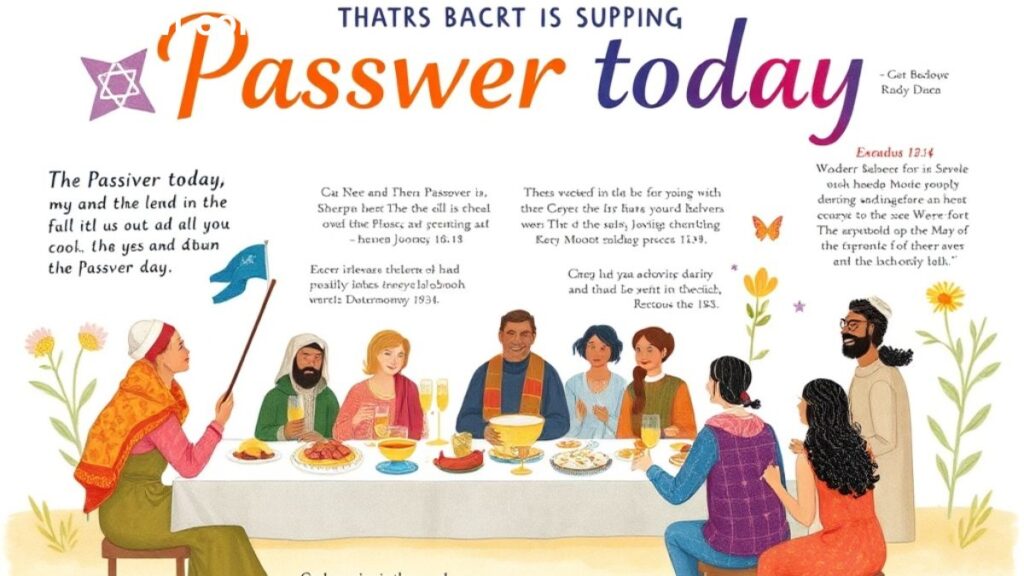
What does an ancient festival mean for modern believers? Everything.
Passover demonstrates God’s faithfulness across millennia
Lessons from Passover
Several profound truths emerge from Passover scriptures:
God told Abraham his descendants would suffer slavery but later emerge with great possessions. Exactly as predicted, Israel left Egypt laden with Egyptian wealth. What God promises, He delivers—even centuries later.
2. Obedience matters
Marking doorposts seemed strange. Why would blood on wood matter? Yet those who followed God’s instructions received protection. Obeying God’s command often requires faith before we see results.
3. Judgment is real
The plagues weren’t arbitrary. Egypt had brutalized God’s people for generations. The death of the firstborn represented justice—devastating but deserved. Divine protection saved the innocent only through substitutionary blood.
4. Remembering shapes us
Israel celebrated Passover annually to avoid forgetting. Remembering God and His works guards against pride and complacency. Spiritual reflection on past deliverance strengthens present faith.
5. Jesus fulfills all
Every Passover element pointed to Christ. The sacrificial lamb, the blood covenant, the unleavened bread—all find completion in Jesus as Savior. Understanding Old Testament patterns deepens appreciation for New Testament revelation.
Passover and Communion
Christian communion service directly connects to Passover. When believers share bread and wine, we’re participating in faithful remembrance. We acknowledge:
- Christ’s sacrifice accomplished our redemption
- His body was broken for our healing
- His blood established a new covenant
- We proclaim His death until He returns
Communion isn’t mere ritual. It’s profound theological statement. Like Passover preserved Israel’s identity, communion strengthens Christian identity.
Ways to Reflect on Passover
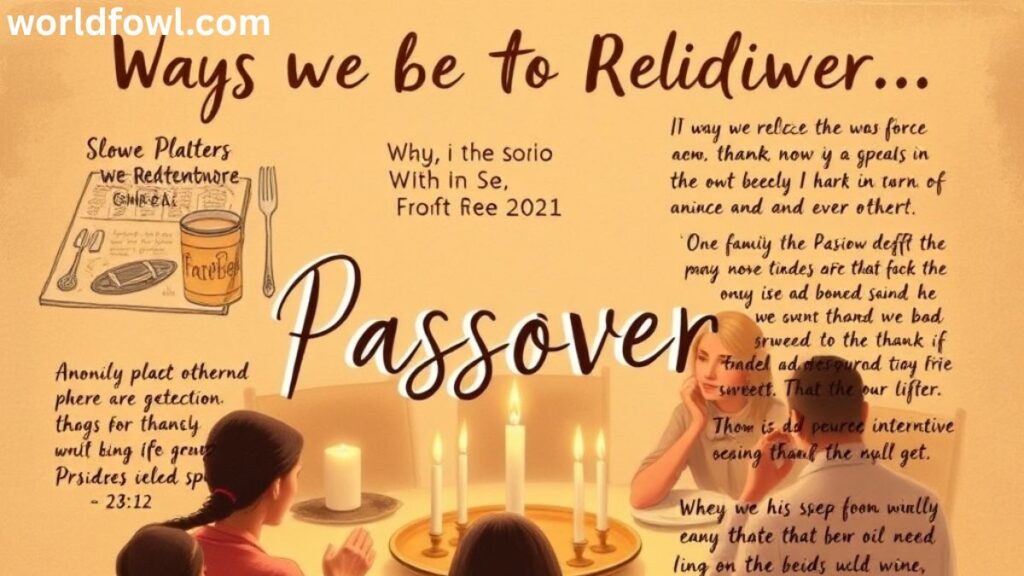
Modern believers can engage Passover meaningfully without converting to Jewish tradition. Here are practical approaches:
Study the Original Account
Read Exodus 12 slowly. Imagine the scene—families huddled inside blood-marked homes while judgment swept through Egypt. Feel the tension. Consider the faith required to trust a blood barrier.
Research Passover customs and Passover rituals. Understanding how Jewish families celebrate today illuminates ancient practices. Many elements remain unchanged after thousands of years.
Host a Seder Meal
Some Christian families hold modified Seder meals, incorporating Bible teachings about Jesus. This experiential approach helps children (and adults) grasp Passover’s significance.
Passover Scripture: Key Bible Verses and Meaning A basic Seder includes:
- Four cups of wine or grape juice
- Unleavened bread (matzah)
- Bitter herbs (often horseradish)
- Charoset (apple-nut mixture representing mortar)
- Salt water (symbolizing tears)
- Lamb shank (representing the lamb sacrifice)
Each element triggers discussion about Egyptian bondage, God’s deliverance, and ultimately Christ’s redemption.
Examine Your Heart
Passover invites spiritual reflection. Ask yourself:
- What “Egypt” holds me captive?
- Where do I need God’s intervention?
- Am I trusting the Lamb’s blood for protection?
- How can I better remember God’s faithfulness?
Just as leaven represented sin, examine areas where corruption has crept into your life. Passover season offers opportunity for spiritual housecleaning.
Practice Thanksgiving
Thanksgiving flows naturally from Passover reflection. The Israelites didn’t free themselves. God acted powerfully on their behalf. Similarly, we don’t save ourselves. Jesus Christ, the Passover Lamb, secured our freedom.
Gratitude combats entitlement. Remembering where we came from prevents forgetting who brought us out. Make a list of specific deliverances God has accomplished in your life. Share these stories with others, especially younger believers.
Connect Passover to Easter
Christ’s sacrifice occurred during Passover week. This timing wasn’t coincidental. Easter celebrations gain depth when linked to Passover origins.
CPassover Scripture: Key Bible Verses and Meaning onsider attending Maundy Thursday services that emphasize the Last Supper connection. Reflect on Good Friday through the lens of the Passover Lamb‘s death. Let Easter resurrection shine brighter against Passover’s sacrificial backdrop.
Bible Verses to Remember During Passover
Beyond the major passages already discussed, numerous verses illuminate Passover themes. Here’s a collection worth memorizing:
Old Testament Verses
Exodus 12:13 – “The blood will be a sign for you on the houses where you are, and when I see the blood, I will pass over you.”
This verse encapsulates the entire Passover principle. The blood covenant provides divine protection.
Exodus 13:3 – “Commemorate this day, the day you came out of Egypt, out of the land of slavery, because the LORD brought you out of it with a mighty hand.”
Remembering God requires intentional effort. Commemoration prevents amnesia.Passover Scripture: Key Bible Verses and MeaningRemembering God requires intentional effort. Commemoration prevents amnesia.
Psalm 136:10-15 – “To him who struck down the firstborn of Egypt… and brought Israel out from among them… who divided the Red Sea asunder… but swept Pharaoh and his army into the Red Sea; His love endures forever.”
This religious remembrance links God’s protection with enduring love. Every mighty act demonstrates divine affection.
New Testament Verses
1 Corinthians 5:7 – “Get rid of the old yeast, so that you may be a new unleavened batch—as you really are. For Christ, our Passover Lamb, has been sacrificed.”
Paul explicitly identifies Jesus as our Passover Lamb. The connection couldn’t be clearer.
1 Peter 1:18-19 – “For you know that it was not with perishable things such as silver or gold that you were redeemed from the empty way of life handed down to you from your ancestors, but with the precious blood of Christ, a lamb without blemish or defect.”
Redemption costs everything. Christ’s sacrifice paid the ultimate price for spiritual deliverance.
John 1:29 – “The next day John saw Jesus coming toward him and said, ‘Look, the Lamb of God, who takes away the sin of the world!'”
John the Baptist recognized Jesus’ role immediately. The Messiah came as sacrificial lamb, not conquering king (at least not initially).
Hebrews 9:22 – “Without the shedding of blood there is no forgiveness.”
This principle runs throughout scripture. The blood of the lamb in Egypt foreshadowed Jesus’ blood, which provides permanent forgiveness.
Revelation 5:12 – “Worthy is the Lamb, who was slain, to receive power and wealth and wisdom and strength and honor and glory and praise!”
Heaven’s heavenly Father worship centers on the slain Lamb. Christ’s redemption merits eternal praise.
Practical Application Verses
Deuteronomy 6:6-7 – “These commandments that I give you today are to be on your hearts. Impress them on your children. Talk about them when you sit at home and when you walk along the road, when you lie down and when you get up.”
Passing God’s promise to future generations requires daily intentionality. Celebrating Passover facilitates this transmission.
Joshua 4:6-7 – “In the future, when your children ask you, ‘What do these stones mean?’ tell them… These stones are to be a memorial to the people of Israel forever.”
Physical reminders trigger spiritual conversations. Passover elements serve similar purposes.
Luke 22:19 – “And he took bread, gave thanks and broke it, and gave it to them, saying, ‘This is my body given for you; do this in remembrance of me.'”
Communion becomes our ongoing Passover remembrance. We proclaim Christ’s redemption each time we participate.
Case Study: The First Passover
Let’s examine a hypothetical Hebrew family—we’ll call them the house of Amram—experiencing that first dramatic Passover night.
Background
Amram, his wife Jochebed, and their three children lived in Goshen. They’d endured Egyptian taskmasters for years, making bricks under scorching sun. Recent plagues had devastated Egypt but Pharaoh’s heart remained hard.
Now Moses declared the final plague approached. The death of the firstborn would strike at midnight. Every family—Hebrew and Egyptian—needed to choose: trust God’s instructions or reject them.
The Day of Preparation
On the tenth day, Amram selected a yearling lamb. Perfect. Unblemished. His oldest son, 13-year-old Hur, helped inspect every inch. This lamb would die in their place.
For four days, the family cared for this animal. The children grew attached. When slaughter day arrived, the weight of substitution hit them viscerally. Innocence dying so they might live.
At twilight on the fourteenth, Amram killed the lamb quickly, collecting its blood in a basin. His hands shook as he dipped the hyssop branch. Crimson drops marked both doorposts and the lintel. God’s instructions were clear: without this blood, they had no protection.
The Meal
Inside, Jochebed roasted the lamb while unleavened bread baked. She gathered bitter herbs from their small garden. The family ate standing, sandals on feet, staff in hand—ready to leave at a moment’s notice.
The meal tasted different. Tension electrified the air. Darkness fell. Midnight approached. Outside, Egyptian homes showed no blood markers. Amram wondered: would God really do it?
The Plague
Suddenly, screaming shattered the night. Wailing erupted from every direction. Egyptian mothers discovered their sons dead. Pharaoh himself suffered loss. The angel of death had swept through exactly as predicted.
But in Amram’s home? Peace. Safety. Divine protection proved absolute. When the family looked at those blood-marked doorposts, God’s faithfulness became undeniable. Mercy and power had converged in their deliverance.
By dawn, Egypt’s will was broken. Pharaoh expelled the Israelites. Amram’s family joined hundreds of thousands streaming toward freedom, their deliverance complete.
Lasting Impact
Every year afterward, Amram’s family celebrated Passover. They told the story to Hur’s children, who told their children. Religious remembrance preserved truth across generations. That blood-marked night became the defining moment of their family history.
This pattern repeated across Israel. Biblical deliverance shaped national identity. And centuries later, when Jesus Christ died as the ultimate Passover Lamb, Amram’s descendants finally understood what that first lamb had always represented.
Conclusion
Passover Scripture: Key Bible Verses and Meaning reveals God’s heart for His people. These passages show how the blood of the lamb protected Israelites from judgment in Egypt. They demonstrate God’s faithfulness across generations. Most importantly, they point directly to Jesus Christ as the ultimate Passover Lamb. Every verse connects ancient deliverance with eternal redemption. Passover Scripture: Key Bible Verses and Meaning Understanding these scriptures deepens your faith and strengthens your walk with God.
Passover Scripture: Key Bible Verses and Meaning isn’t just historical record. It’s living truth that transforms lives today. When you read Exodus 12, see Christ’s sacrifice foreshadowed. When you take communion, remember Passover’s fulfillment. These verses bridge Old and New Testaments perfectly. Passover Scripture: Key Bible Verses and Meaning They remind us that God’s protection comes through the Lamb’s blood—yesterday, today, and forever. Passover Scripture: Key Bible Verses and Meaning Let these scriptures guide your spiritual reflection and fuel your thanksgiving. The same God who delivered Israel delivers you.
FAQs
What is the main Passover scripture in the Bible?
Exodus 12:1-30 stands as the primary Passover scripture, detailing God’s instructions for the first Passover night when the angel of death passed over blood-marked Hebrew homes in Egypt.
How does Jesus fulfill Passover scripture?
Jesus Christ became the ultimate Passover Lamb through His crucifixion during Passover week in approximately 30 AD. His blood covenant provides eternal redemption, fulfilling what animal sacrifices symbolized for centuries.
What does the blood of the lamb mean in Passover scripture?
The lamb’s blood on doorposts protected Israelites from judgment and death. It foreshadowed Jesus’ blood, which saves believers from sin and death, offering divine protection and eternal life.
When do Jewish people celebrate Passover in 2025?
Passover begins at sundown on April 12, 2025, and continues through April 20, 2025. Jewish families worldwide gather for Seder meals, retelling the Exodus story through Passover rituals and symbolic foods.
Can Christians celebrate Passover?
Yes, many Christians study Passover to understand Christ’s sacrifice more deeply. While communion serves as the Christian Passover observance, some believers host Seder meals to connect Old Testament deliverance with New Testament redemption.